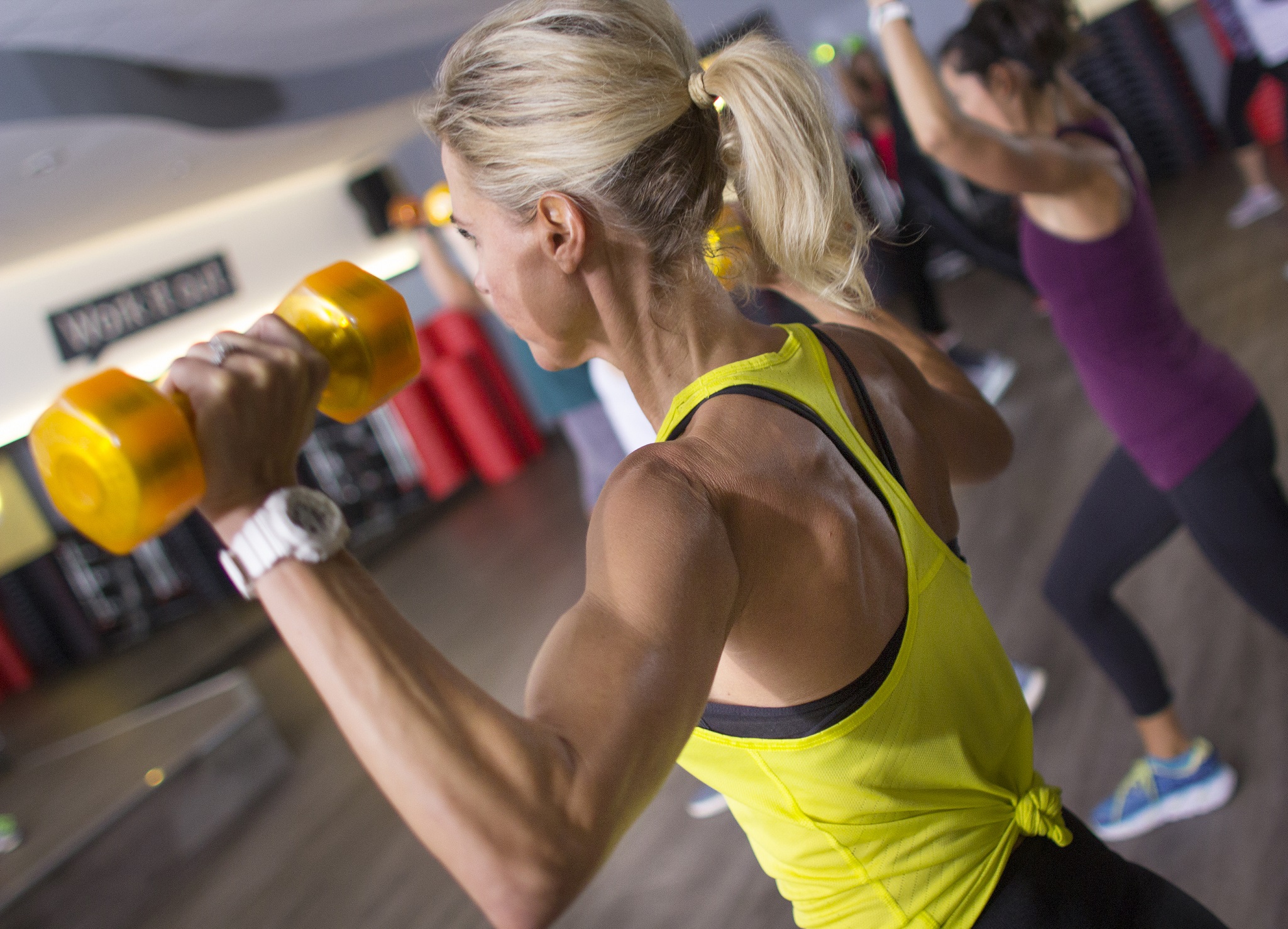
Dumbbell Biceps Curls: Step-by-Step Form

Bicep curl with dumbbells: step-by-step form

The dumbbell bicep curl is a simple, affordable exercise that focuses on strengthening the muscles in the front of the upper arm. It only requires a pair of dumbbells and a small amount of space, making it a useful option whether you’re working out at the gym or at home.

Because it targets the biceps directly while engaging the forearms and grip, the dumbbell bicep curl is a reliable choice for anyone looking to improve arm strength or definition. The movement is easy to learn, and with proper technique, you can build muscle, increase endurance, and maintain functional strength for everyday tasks.

Read on to learn more about proper curling technique, tips for beginners, common mistakes to avoid, and variations to keep your workouts effective and interesting.

How to do biceps curls with dumbbells correctly

Although dumbbell bicep curls are a relatively simple exercise, using the right technique makes all the difference.

Here’s how to perform the dumbbell bicep curl with proper form:

  1. Determine your position – Stand with your feet shoulder-width apart. Keep your knees slightly soft (not locked) to maintain balance.
  2. Hold the dumbbells —Place a dumbbell in each hand with your arms fully extended at your sides. Your palms should be facing forward and your shoulders should remain relaxed.
  3. Brace your core – Gently engage your abs to stabilize your spine. Keep your chest high and avoid leaning back.
  4. Start curling – Exhale as you bend your elbows and lift the dumbbells up. Keep your upper arms still so that only your forearms move.
  5. Get to the top – Stop when the dumbbells are close to shoulder level. Pause and squeeze your biceps for a second.
  6. Descend with control – Inhale as you extend your elbows and slowly return the dumbbells to the starting position.
  7. Repeat – Complete the number of reps you planned, making sure each rep looks the same.

Pro tip: If you feel like your shoulders or lower back are helping, it means you’re carrying too much weight. Lower to a lighter dumbbell so that the biceps remain responsible for the movement.

What muscles do dumbbell biceps target?

The dumbbell curl primarily targets the biceps brachii, which consists of two heads (the short head and the long head). Together, they allow you to bend your elbow and rotate your forearm.

But several other muscles also contribute to movement:

  • Brachialis – Located below the biceps brachii, this muscle helps bend the elbow and adds thickness to the arm.
  • Brachioradialis – This is a key forearm muscle that helps flex the elbow and maintains grip strength.
  • Flexors and extensors of the forearm – These are smaller forearm muscles that are activated to stabilize the wrist during flexion.
  • Core stabilizers – Your abs and lower back work isometrically to keep your torso upright.

Because these muscles work together, curls do more than build stronger arms. They also contribute to better traction and stability in everyday life.

Tips for beginners

Getting started with dumbbell bicep curls shouldn’t feel intimidating. Here are some tips to help you feel comfortable and confident:

  • Choose an acceptable weight – Start with lighter dumbbells – anywhere from 5-12 pounds is a good range for many beginners. The goal is to get through each rep with control, not to lift as much weight as possible.
  • Try alternating curls – If contracting both arms at once feels unstable, work one arm at a time. This allows you to focus on form and helps correct imbalances between the sides.
  • Slow down – Count to three as you lower the dumbbells. The down phase (eccentric movement) is just as important as the lift.
  • Check your posture – Stand tall with relaxed shoulders and avoid slouching forward. Good posture makes curling safer and more effective.

These small adjustments can set the stage for long-term progress without unnecessary stress or frustration.

Common mistakes you should avoid

Although curls are relatively simple, it’s easy to slip into bad habits. Watch out for these common mistakes:

  • Swinging the weights – Using momentum shifts the effort away from the biceps. If you feel yourself swaying, reduce the load and slow down.
  • Moving elbows forward – Your elbows should stay tucked close to your torso. When carried forward, the shoulders take over.
  • Incomplete range of motion – Going only halfway down or skipping the squeeze at the top reduces efficiency. Aim for full extension and contraction.
  • Arching the back – If your lower back is arched, this is a sign that the weight is too heavy. Reduce your weight, tighten your core and focus on form.
  • Rushing reps – Performing curls quickly reduces time under tension, which limits muscle growth. Controlled repetitions are more effective.

Correcting these mistakes not only helps you see results faster, but also minimizes the risk of injury.
Your workout deserves a Chuze upgrade! Great gym, great price. Join the community!

Is curling with 20 pound dumbbells okay?

Whether 20-pound curls are « good » is entirely up to the individual. For many beginners, curling 20 pounds per hand with strict form is a significant challenge. Others may find that starting with 8-15 pounds is more realistic as they learn the technique. For experienced athletes, 20 pounds can be a warm-up weight or part of a higher-rep endurance set.

The most important thing is not the number of the dumbbell, but whether you can complete the repetitions with good posture, a controlled pace and without using momentum.

Remember: strength training progress is personal. Instead of comparing numbers, focus on steady improvements over time.

What are 7-7-7 bicep curls?

The 7-7-7 method, often called « 21s, » is a popular curl variation that challenges your biceps through three different ranges of motion.

  1. 7 reps from bottom to middle up – This emphasizes the initial stretch of the biceps.
  2. 7 reps from half to top – This builds strength in peak contractions.
  3. 7 full range reps – This fatigues the muscle throughout the movement.

By combining partial and full reps, 21s increase time under tension and create an intense muscle pump. It’s best to add them as a finishing touch to your biceps workout once you’re comfortable with standard curls.

Variations of biceps curls with dumbbells

Changing up your curl routine helps keep your workout fresh by targeting the muscles from slightly different angles. Here are some effective options:

  • Hammer curls – Use a neutral grip (palms facing each other) to emphasize the brachialis and forearms. This movement not only adds thickness to your arms, but also improves grip strength, which carries over to other lifts.
  • Slanted curls – Perform curls while lying on an incline bench to stretch your biceps and hit the long head more effectively. A deeper stretch at the bottom of the movement helps you build strength through a greater range of motion.
  • Concentrated curls – Sit on a bench, rest your elbow on your thigh and curl one dumbbell at a time for strict form. This variation eliminates inertia, forcing your biceps to do all the work and strengthens the mind-muscle connection.
  • Zottman curls – Curl up with palms facing forward, then rotate your wrists so palms face down as you lower the weight. This combines a biceps and forearm workout in one movement, making it effective for building both strength and endurance.
  • Reverse curls – Turn your palm down grip to shift the focus to the forearms while still working the biceps. This is a great lifting accessory to balance arm training and improve overall forearm development.

How to add dumbbell bicep curls to your routine

Curls fit easily into many different workout styles. Here are some options:

  • Upper body days – Combine curls with chest presses, rows or shoulder exercises for a balanced workout.
  • Hands-on sessions – Combine curls with triceps moves like dips or curls for a complete arm routine.
  • Full body workout – Use curls as additional work after compound lifts such as squats, deadlifts or pull-ups.
  • Circuit training – Add curls to a circuit with push-ups, lunges and planks for a functional workout.

Most people benefit from 2-3 sets of 10-15 reps, but you can adjust the weight and rep range depending on your goals. This means heavier weights and fewer reps for strength or lighter weights and more reps for endurance and definition.

Benefits of dumbbell biceps curls

Why incorporate curls into your training? There are many clear advantages:

  • Targeted arm strength – Curls directly isolate the biceps, making them an effective choice for building arm strength.
  • Improved durability – Stronger arms make everyday tasks like carrying bags or lifting objects less tiring.
  • Balanced aesthetics – Well developed biceps create proportion with triceps and shoulders.
  • Minimal equipment – All you need is a pair of dumbbells and some space.
  • Easy progression – You can increase the weight, reps, or pace to challenge yourself over time.

These benefits explain why curls remain an exercise of choice for many people at various fitness levels.

Build stronger arms with Chuze Fitness

Dumbbell bicep curls are a simple but effective exercise that can help you build strength and improve endurance. By practicing good form, avoiding common mistakes, and mixing in variations, you’ll create a routine that supports both functional fitness and aesthetic goals.

At Chuze Fitness, we believe that strength training should feel accessible and empowering. Whether you’re just learning how to curl a pair of dumbbells or perfecting your technique after years of training, our supportive community and expert resources are here to help.

Pair your curls with other strength moves, join one of our group classes, or use our on-demand workouts to keep your workouts consistent and motivating. Whenever you’re ready, pick up your dumbbells and let each contraction bring you closer to stronger, more capable arms.

sources:

Health line. Eccentric training offers a big bang for your strength training. https://www.healthline.com/health/fitness/eccentric-training

Physiopedia. Brachialis. https://www.physio-pedia.com/Brachialis

Physiopedia. Brachiordial https://www.physio-pedia.com/Brachioradialis

ScienceDirect. Biceps Brachii muscle.

Teach me anatomy. Muscles of the front of the forearm.

Reviewed by:

Annie is Vice President of Fitness at Chuze Fitness and leads the group fitness and team training departments. She has over 25 years of experience in club management, personal training, group exercise and instructor training. Annie lives with her husband and son in San Diego, California and enjoys hot yoga, snowboarding, and all things wellness.


Gym Fitness,Self-Care,Strength Training

#Bicep #curl #dumbbells #stepbystep #form

Laisser un commentaire

Votre adresse e-mail ne sera pas publiée. Les champs obligatoires sont indiqués avec *